We ship orders the same or next day. DPD delivery: 2–7 days, free from €100. We ship orders the same or next day. DPD delivery: 2–7 days, free from €100. We ship orders the same or next day. DPD delivery: 2–7 days, free from €100.
We ship orders the same or next day. DPD delivery: 2–7 days, free from €100. We ship orders the same or next day. DPD delivery: 2–7 days, free from €100. We ship orders the same or next day. DPD delivery: 2–7 days, free from €100.
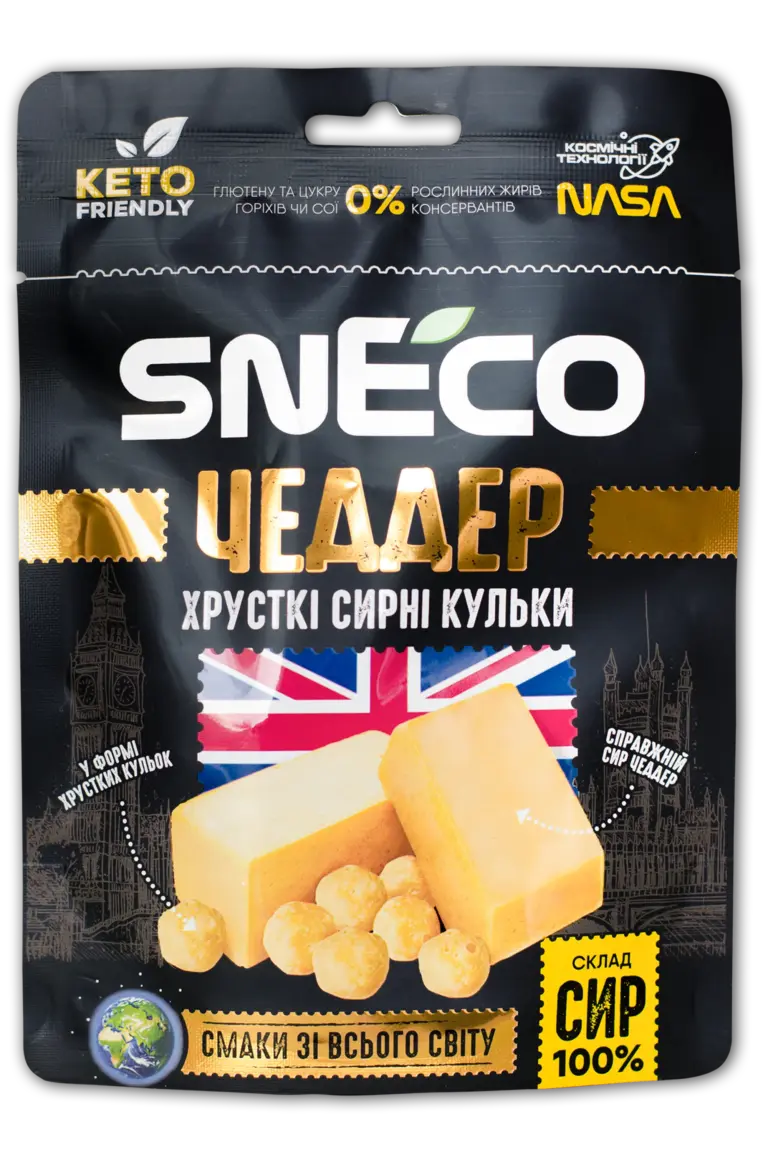
Short answer: in everyday speech, “freeze-dried cheese” and “dried cheese” mean the same thing — crunchy cheese with no water. Technically, these are different processes: freeze-drying means freezing and removing the ice under vacuum, while snEco drying removes water under vacuum at 36–38 °C without freezing. The result for the shopper is similar, but texture, taste and price differ.
Sublimation (freeze-drying) is when a product is first deep-frozen, and then, under vacuum, the ice turns straight into vapour, bypassing the liquid stage. This is how coffee, berries and ready meals for astronauts and hikers are made. The product keeps its shape and colour, becomes very light and dry, and almost fully recovers when water is added. It’s an expensive technology: a cycle takes a day or longer, and the equipment costs millions.
Freeze-dried cheese does exist — mainly as an industrial ingredient (cheese powders, fillings) or as an exotic snack for hiking. It’s brittle, fragile, often “styrofoam-like” to the touch and has a less pronounced flavour, because aromatic compounds are partly lost during freezing.
snEco doesn’t freeze the cheese. Pieces of cheese go into a vacuum chamber where water boils at 36–38 °C, and microwaves drive it out evenly from the inside. The steam expands each piece — it puffs up and becomes porous and crunchy, like meringue or a cheese soufflé. There’s no freezing, so the cheese flavour isn’t “washed out” but concentrated. This is our own patented VacWave Bio Nutrition technology (patent No. 139035); more details in the article how dried cheese is made.
| Freeze-dried cheese | snEco dried cheese | |
|---|---|---|
| Process | freezing → vacuum, ice straight to vapour | vacuum + microwaves, 36–38 °C, no freezing |
| Texture | brittle, fragile, “styrofoam” | crunchy, porous, puffed, melts in your mouth |
| Flavour | muted, some of the aroma is lost | concentrated cheese flavour |
| Ingredients | cheese (with additives in industrial powders) | only cheese |
| Protein | ≈40–55 g per 100 g | 31–60 g per 100 g |
| Storage | for years in airtight packaging | 18 mo. without refrigeration (14/28 g packs) |
| Where to buy | mostly abroad, outdoor shops | snEco website, 25+ chains in Ukraine |
The word “freeze-dried” has become an everyday synonym for “dry, crunchy, water-free” — just like “Xerox” for a photocopier. People searching “buy freeze-dried cheese” in Ukraine almost always mean crunchy cheese bites — that is, dried cheese. So don’t get confused by the term: if you want crunchy cheese for beer, for a salad or as a protein snack, it’s snEco dried cheese.
“Dry cheese” is an even broader term. It’s used for grated Parmesan in bags, cheese powder for sauces, braided string cheese and crunchy bites alike. If it’s a snack eaten like crisps, it’s dried cheese. If it’s an ingredient for baking or sauce, it’s cheese powder — a completely different product.
For snacking, with drinks, for kids, on the road — dried cheese: it has better texture and full flavour, is available in any city in Ukraine and costs 94–99 UAH per 28 g pack. Freeze-dried cheese makes sense only for multi-day expeditions where every gram counts — and even there, a 28 g pack of dried cheese weighs less than an apple and provides 12–17 g of protein.
Author: Pylyp Gryshyn, co-founder of snEco, head of production
Share on:

We’ll call you back and help!

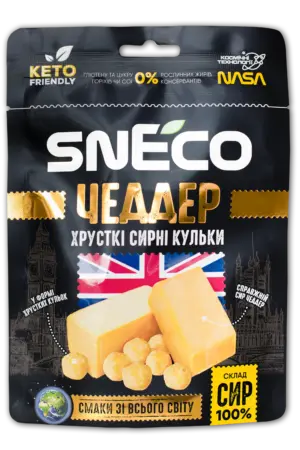 Dried snEco Cheese “Cheddar”, 28 g
 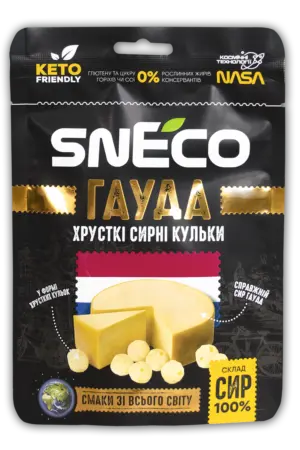 Dried snEco Cheese “Gouda”, 28 g
 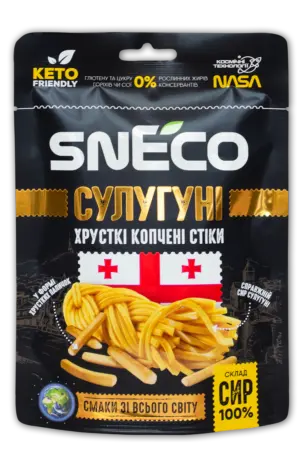 Dried snEco Cheese “Sulguni”, 28 g