We ship orders the same or next day. DPD delivery: 2–7 days, free from €100. We ship orders the same or next day. DPD delivery: 2–7 days, free from €100. We ship orders the same or next day. DPD delivery: 2–7 days, free from €100.
We ship orders the same or next day. DPD delivery: 2–7 days, free from €100. We ship orders the same or next day. DPD delivery: 2–7 days, free from €100. We ship orders the same or next day. DPD delivery: 2–7 days, free from €100.
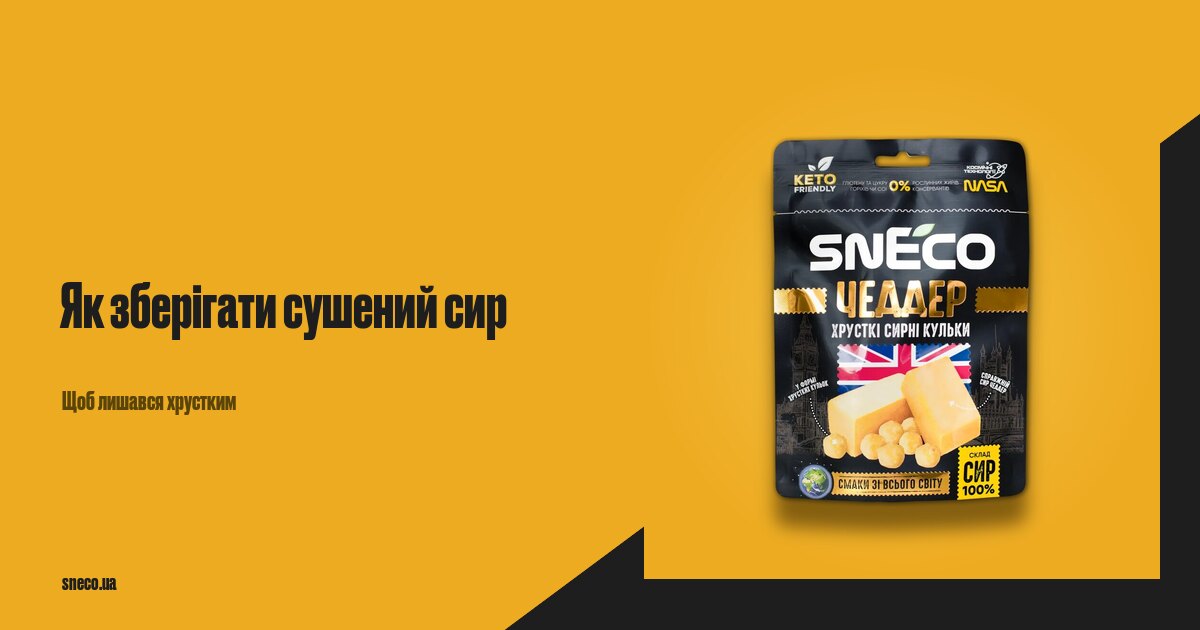
In short. Dried cheese isn't afraid of heat — it's afraid of moisture. Keep the pack closed, away from the stove and sink, at room temperature, and it will stay crispy until the end of its shelf life. The fridge is no help here; it's a source of condensation.
Regular cheese is about 40% water. VacWave technology removes almost all of the moisture at a low temperature — 36–38 °C, in a vacuum. The cheese is neither fried nor baked: the water evaporates on its own, leaving tiny cavities inside. That's exactly what gives it its signature crunch.
This leads to the main storage rule: anything that brings moisture back into the product takes away its crunch. Not temperature, not light — moisture.
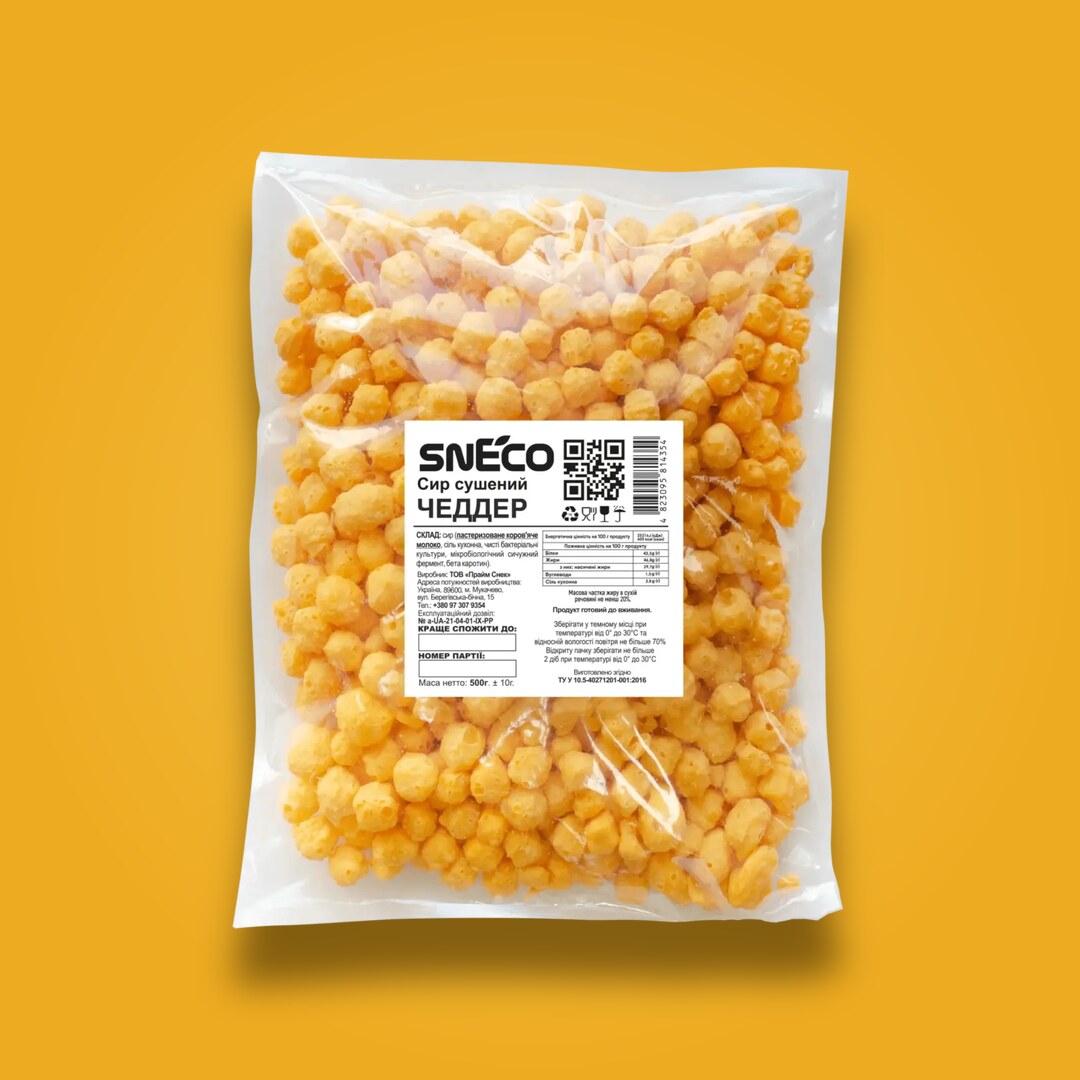
Single-serve packs of 14, 20 and 28 g are designed for one sitting — you simply eat them. The 500 g bag, however, is something you open once and then store yourself. After each use, squeeze out the air and close the bag tightly: with a clamp, a clip, or by pouring the contents into a jar with a lid.
The worst spots in the kitchen are the cupboard above the stove, the shelf next to the kettle and the windowsill above the sink. Moist steam rises there regularly, and even a closed pack absorbs it over time. Your best bet is an ordinary kitchen cupboard away from appliances, a pantry or a drawer.
This is the most common mistake. The logic of “it's cheese, so it goes in the fridge” doesn't work here: our product contains almost no moisture, so there's nothing to spoil. But when you take a cold pack into a warm room, condensation settles on the snack — and softens it within a few hours.
The freezer is the same, only faster.
| Pack size | Shelf life | Why |
|---|---|---|
| 14 and 28 g packs | 18 months | Sealed until you open them |
| “Cheese + nut” mixes, 20 g | 8 months | The exact shelf life is stated on the label |
| 500 g bag | 8 months | Opened many times; after that, it depends on the conditions in your home |
| Crunchy Olives 14 g | 12 months | Different raw material and different fat content |
Always check the exact date on the package itself — it's printed there.
This happens if the bag has been left open in a humid room. The product hasn't gone bad — it has simply absorbed moisture.
You can dry it out in the oven at about 60–70 °C for 10–15 minutes, then let it cool completely on a rack. The crunch usually comes back. ⚠ But this is “first aid”, not standard practice: it's better not to let the snack get damp in the first place.
But if the smell has changed or a coating has appeared, we don't eat a product like that. That's no longer about moisture.
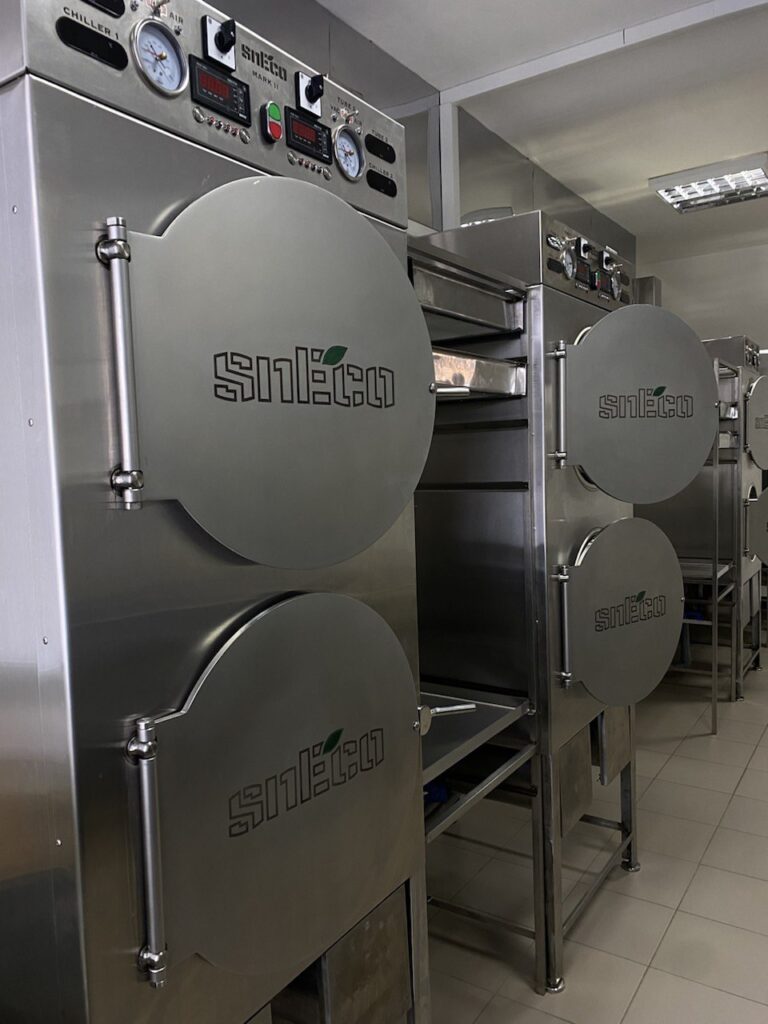
At the plant, the finished snack never sits out in the open air: it's packed straight out of the chamber. In fact, the product's entire journey from drying to your kitchen happens in sealed packaging. So the only time the environment really affects it is at your home, after the pack has been opened.
The date on the package applies to the sealed product. As soon as you open the 500 g bag, the clock runs by different rules — the conditions in your kitchen.
If the bag is closed tightly after every use and kept in a dry cupboard, the snack easily stays crispy for several weeks — which is exactly how long it usually takes to eat it. But if it sits open next to the stove, you may notice the difference as soon as the next day.
A practical guideline: plan to finish an opened bag within three to four weeks. Not because it will spoil, but because after that it loses the main thing — its crunch.
The best spots are dry and free from temperature swings:
Places to avoid: the shelf above the stove, the area next to the kettle and coffee machine, the windowsill, the cupboard under the sink.
Yes, and that's one of the main scenarios. The product doesn't need to be kept cold, so it does equally well in a car in summer, in a backpack on a hike and in carry-on luggage on a plane.
The only thing to avoid is leaving an opened pack somewhere very humid: on the beach by the water, or in a tent after rain. Moisture is no threat to a closed package.
Dried cheese is a very low-moisture product, so it's hard for it to spoil. But there are three things to go by:
Lost its crunch — it has absorbed moisture. Not dangerous; you can dry it out.
The smell has changed — rancid, sharp. That's fat oxidation; we don't eat a product like that.
A coating or spots have appeared — definitely don't eat it, regardless of the date on the package.
Can I transfer it to a jar?
Yes, it's even more convenient than a clip — as long as the jar is dry and the lid closes tightly. Glass or food-grade plastic, it doesn't matter.
Does sunlight spoil it?
Direct sun doesn't make the snack soft, but over time light and heat oxidise the fat in the cheese — and the taste gets worse. So it's better not to keep the pack on the windowsill.
Can I take it hiking or to the beach?
Yes, and that's one of the best scenarios: the product doesn't need to be kept cold, and it doesn't melt or leak. Just don't leave an opened pack out in humid air for long.
Why does the 500 g bag have a shorter shelf life than the 28 g pack?
Because you open a pack once and eat it right away, while a large bag stays with you for weeks and comes into contact with air every time. The shelf life takes this into account.
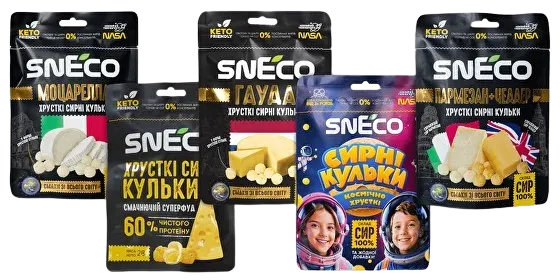
Choose a flavour in the catalogue
Author: Pylyp Gryshyn, co-founder of snEco, head of production
Share on:

We’ll call you back and help!

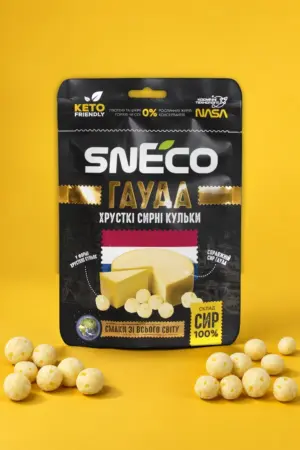 Dried snEco Cheese “Gouda”, 28 g
 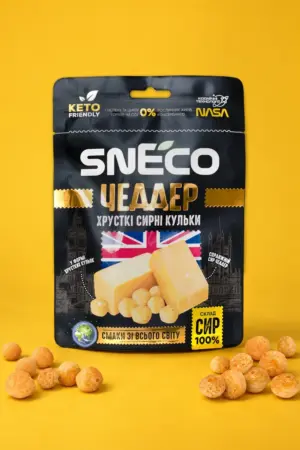 Dried snEco Cheese “Cheddar”, 28 g
 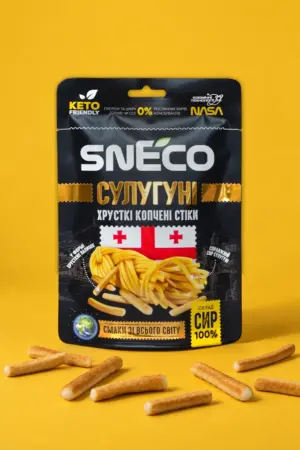 Dried snEco Cheese “Sulguni”, 28 g