We ship orders the same or next day. DPD delivery: 2–7 days, free from €100. We ship orders the same or next day. DPD delivery: 2–7 days, free from €100. We ship orders the same or next day. DPD delivery: 2–7 days, free from €100.
We ship orders the same or next day. DPD delivery: 2–7 days, free from €100. We ship orders the same or next day. DPD delivery: 2–7 days, free from €100. We ship orders the same or next day. DPD delivery: 2–7 days, free from €100.
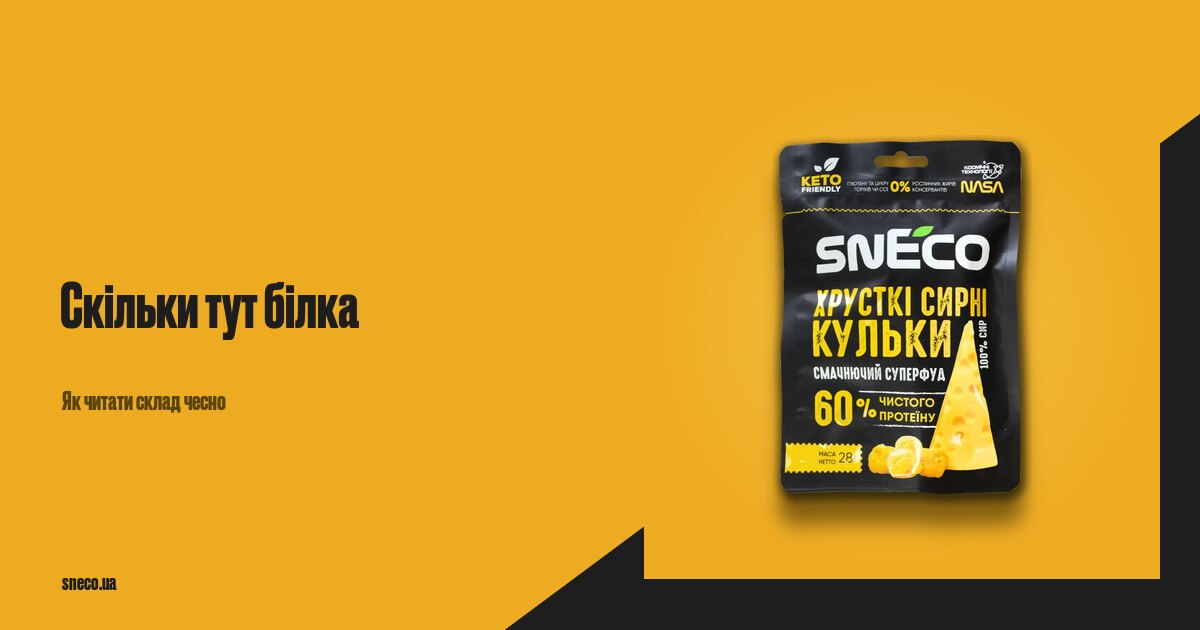
In short. Dried cheese has 31–60 g of protein per 100 g, more than most protein bars, and no sugar. But the figure on the packaging refers to 100 g, while a pack weighs 28 g. Below is how much protein you actually get and what to compare it with.
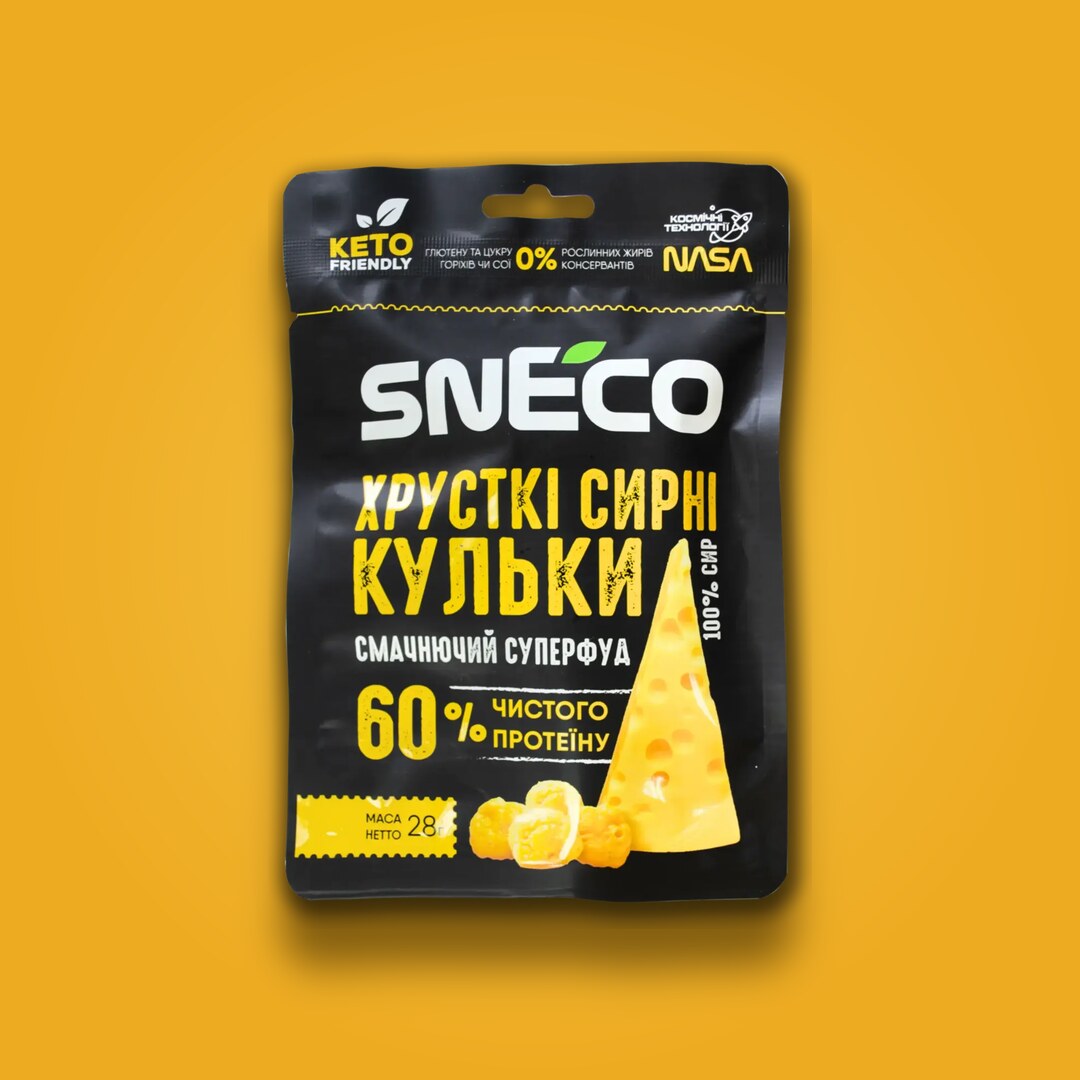
| Flavour | Protein / 100 g | In a 28 g pack | In a 14 g pack |
|---|---|---|---|
| Superfood | 60 g | ≈ 16.8 g | ≈ 8.4 g |
| Primaggio | 53.4 g | ≈ 15 g | ≈ 7.5 g |
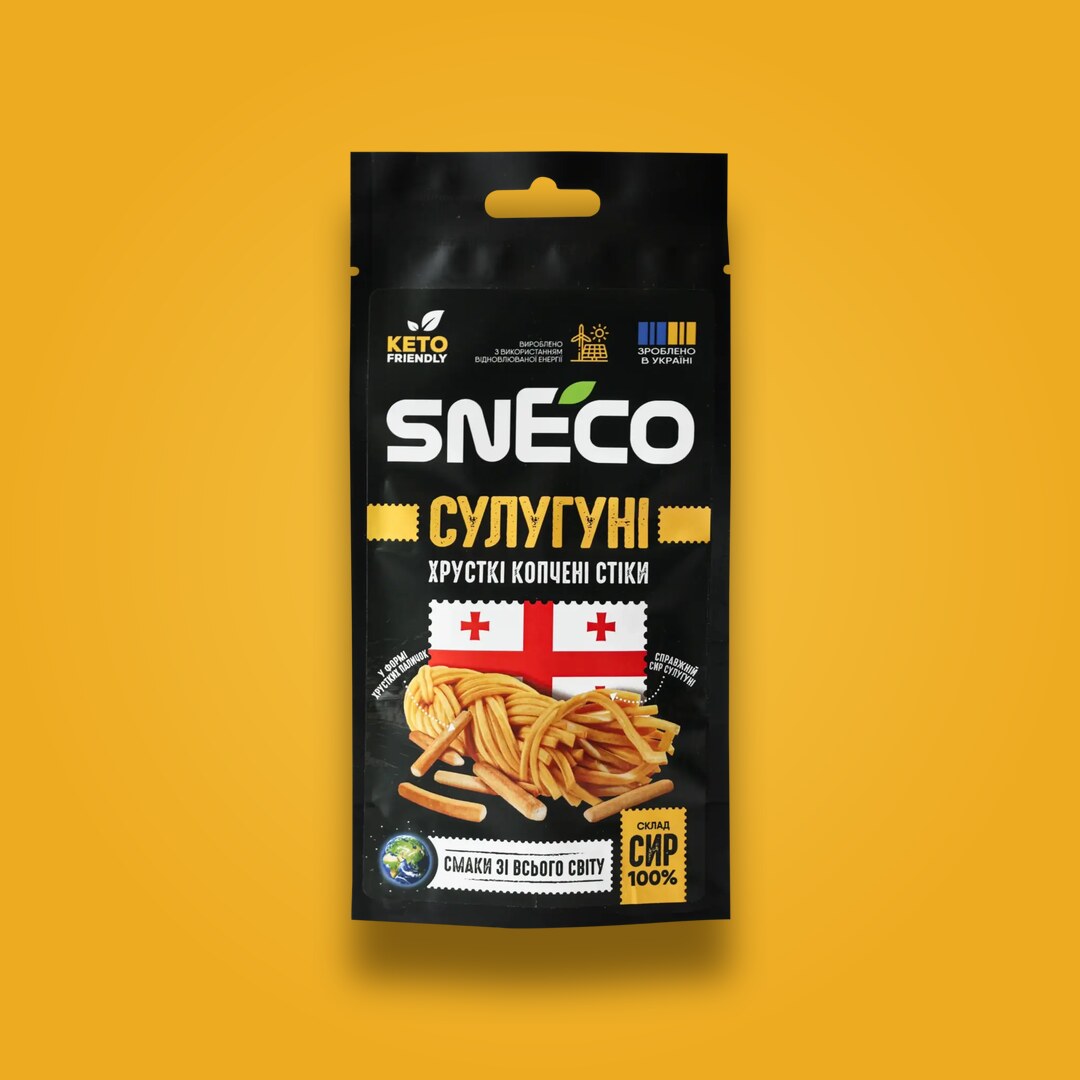
| Sulguni | 52 g | ≈ 14.6 g | ≈ 7.3 g |
| Mozzarella | 49.4 g | ≈ 13.8 g | ≈ 6.9 g |
| Gouda | 48.3 g | ≈ 13.5 g | ≈ 6.8 g |
| Emmental | 46 g | ≈ 12.9 g | — |
| Cosmic | 45.9 g | ≈ 12.9 g | — |
| Cheddar | 42.3 g | ≈ 11.8 g | ≈ 5.9 g |
| Blue Royale | 31.7 g | ≈ 8.9 g | ≈ 4.4 g |
For the numbers to mean something, you need a reference point:
The key difference is not the number itself but what comes with it. Dried cheese has 1–4 g of carbs per 100 g and no added sugar: there is simply nowhere for it to come from, as the only ingredient is cheese.
Three things worth checking on any “protein” product:
1. What it is calculated per. Manufacturers often state protein per 100 g but sell a 30–40 g pack. Multiply by the actual weight and the number immediately becomes more modest.
2. How many carbs come with it. A bar with 20 g of protein and 25 g of carbs is more of a dessert. Here the carbs are 1–4 g.
3. Where the protein comes from. Milk protein from cheese is well absorbed and contains all the essential amino acids. It’s not an isolate or a plant blend, it’s simply cheese with the water removed.
After a workout. A pack in your bag needs no fridge, shaker or water. Open it, eat it.
On the road. The most common scenario from our customers’ answers: a long drive where the only food around is at a petrol station.
At the office. Instead of biscuits with your coffee. After 13 g of protein, hunger comes back much later than after something sweet.
The product is calorie-dense: 478–688 kcal per 100 g, because the water was removed from the cheese while the fat and protein remained. But a 28 g pack is about 130–190 kcal, the level of an ordinary snack.
If you count both protein and calories, the best ratio comes from Superfood: the most protein (60 g) with the lowest calorie content in the range (478 kcal).
The question that comes up almost immediately: regular Gouda has about 25 g of protein per 100 g, and this has 48.3. Where does the difference come from if it’s the same cheese?
The answer is simple: the water was removed. About 40% of the weight of regular cheese is water, which contains no protein. When it evaporates, the same 100 grams hold more dry matter, and therefore more protein, fat and calories.
So it isn’t an “enriched” product or a concentrate with added protein. It’s the same cheese, just without the water.
When a bar and a pack of cheese sit side by side on the shelf, comparing them by protein alone is wrong. Look at three parameters together:
| 28 g pack of Superfood | Typical 45 g bar | |
|---|---|---|
| Protein | ≈ 17 g | 10–20 g |
| Carbohydrates | about 1 g | 15–25 g |
| Ingredients | cheese, salt, starter culture, enzyme | usually 10+ ingredients |
| Needs a fridge | no | no |
The main difference is not the protein but the carbs and the length of the ingredient list.
Honestly, about the limits:
If you need protein right after a hard workout — whey protein is absorbed faster. Cheese is slower casein, better suited to keeping you full between meals.
If you limit salt — a 28 g pack contains about 0.9 g of salt. That’s not much, but worth taking into account.
If you need to replace a full meal — a snack won’t do that, and it isn’t meant to. It’s a snack, not lunch.
Is it suitable for gaining muscle mass?
As a supplement, yes: it’s a convenient source of protein between meals. As the basis of a diet, no: no snack should be that.
Does it contain lactose?
Hard aged cheeses contain very little lactose, but the product is not positioned as lactose-free. If you are intolerant, go by your own reaction to the corresponding type of cheese.
Why does Blue Royale have less protein?
That’s a feature of blue cheese itself: it has more fat and less protein than hard varieties.
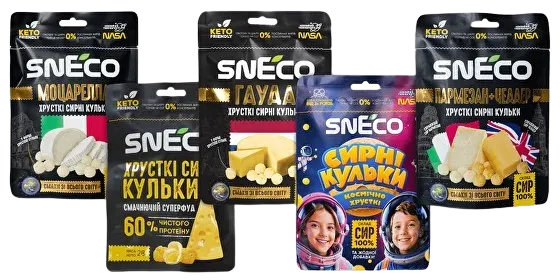
Choose a flavour by protein content
Author: Vadym Gryshyn, co-founder of snEco
Share on:

We’ll call you back and help!

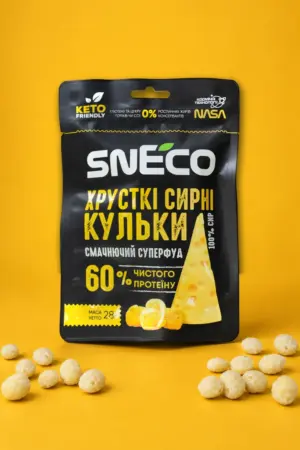 Dried snEco Cheese “Superfood”, 28 g
 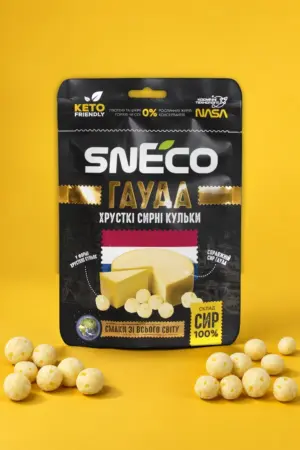 Dried snEco Cheese “Gouda”, 28 g
 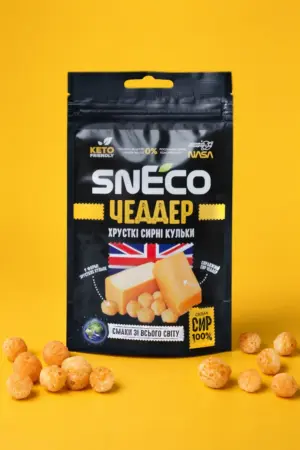 Dried snEco Cheese “Cheddar”, 14 g