We ship orders the same or next day. DPD delivery: 2–7 days, free from €100. We ship orders the same or next day. DPD delivery: 2–7 days, free from €100. We ship orders the same or next day. DPD delivery: 2–7 days, free from €100.
We ship orders the same or next day. DPD delivery: 2–7 days, free from €100. We ship orders the same or next day. DPD delivery: 2–7 days, free from €100. We ship orders the same or next day. DPD delivery: 2–7 days, free from €100.
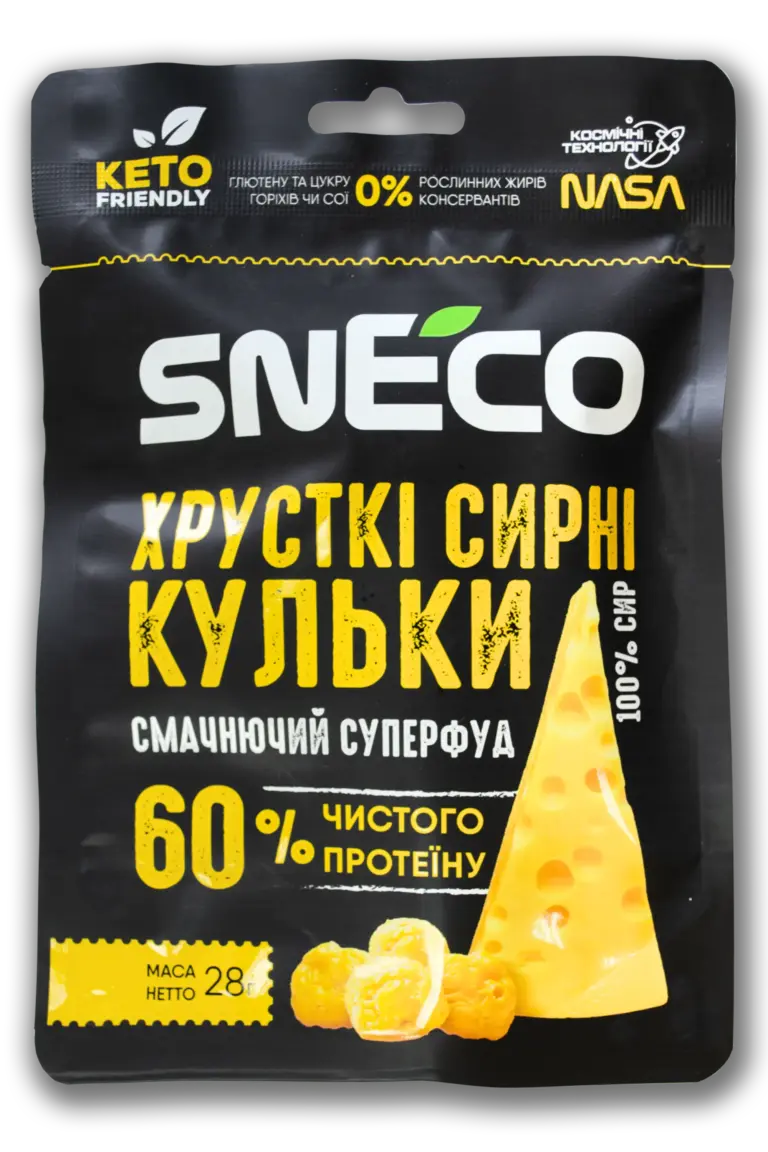
Short answer: on a hike, it’s the grams and the calories per gram that count. The best no-cook protein foods are dried cheese (31–60 g of protein per 100 g, no fridge needed), jerky, nuts and freeze-dried meals. Dried cheese wins on the balance of weight, protein and price, and needs no stove: you eat it straight from the pack at a rest stop or crumble it into soup. Below is a “gram for gram” table and a 3-day plan.
| Product | Protein per 100 g | Kcal per 100 g | Cooking | Fridge |
|---|---|---|---|---|
| snEco dried cheese | 31–60 g | 480–690 | no | no |
| Jerky, cured meat | 30–40 g | 250–350 | no | no |
| Freeze-dried meat | 50–60 g | ≈400 | boiling water | no |
| Nuts | 15–25 g | 600–650 | no | no |
| Fresh hard cheese | 25 g | 350–400 | no | 2–3 days in the mountains |
| Dry-cured smoked sausage | 20–25 g | 450–500 | no | a few days |
| Tinned tuna | 25 g (18 g per 100 g including the liquid) | ≈120 | no | no, but the can is heavy |
| Lentils, grains | 8–9 g cooked | ≈110 | boil 20–40 min | no |
The main advantage of dried cheese is calories and protein per gram of weight: 100 g of product in your backpack gives you 50 g of protein and 600 kcal — like 200 g of fresh cheese, but without the water and without the risk of it turning runny on day three.
In total, about 200 g of dried cheese for three days: that’s 100–120 g of protein for 600 g of backpack weight, counting the nuts. For a group, the more convenient choice is a 500 g pack — it can be poured into a zip bag and weighs less than 18 separate packs.
A closed pack isn’t bothered by +30 °C or by frost: the product is dry, with no water in it that could freeze or turn sour. An opened pack only fears moisture — in the rain, close it tightly or keep it in a zip bag, otherwise within a day the bites will turn soft (edible, but not crispy). The shelf life of a closed 14–28 g pack is 18 months, so you can keep a “hiking stash” at home all the time.
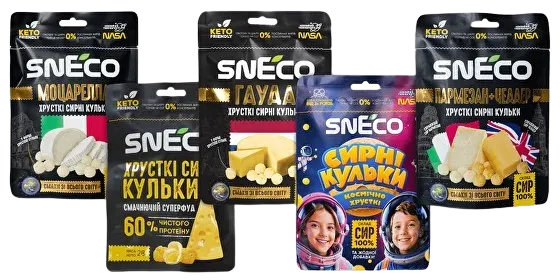
Maximum protein per gram — SUPERFOOD (60 g) and Smoked Sulguni (52 g, plus salt, which you need after sweating). For variety — the ALL IN set with 10 flavours. Vegan option — Crispy olives. General tips for the road — travel snacks.
Author: Vadym Gryshyn, co-founder of snEco
Share on:

We’ll call you back and help!

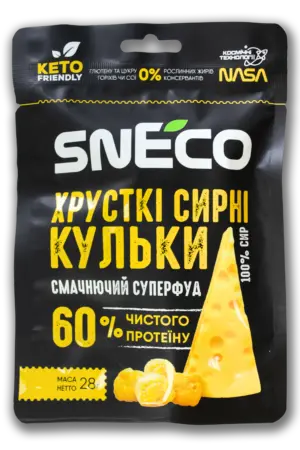 Dried snEco Cheese “Superfood”, 28 g
 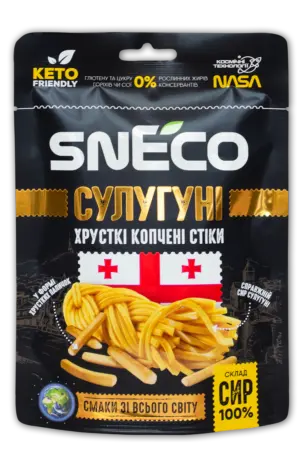 Dried snEco Cheese “Sulguni”, 28 g
 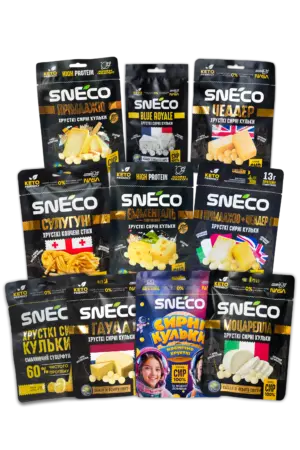 Set “ALL IN” (10 packs), dried snEco cheese