We ship orders the same or next day. DPD delivery: 2–7 days, free from €100. We ship orders the same or next day. DPD delivery: 2–7 days, free from €100. We ship orders the same or next day. DPD delivery: 2–7 days, free from €100.
We ship orders the same or next day. DPD delivery: 2–7 days, free from €100. We ship orders the same or next day. DPD delivery: 2–7 days, free from €100. We ship orders the same or next day. DPD delivery: 2–7 days, free from €100.
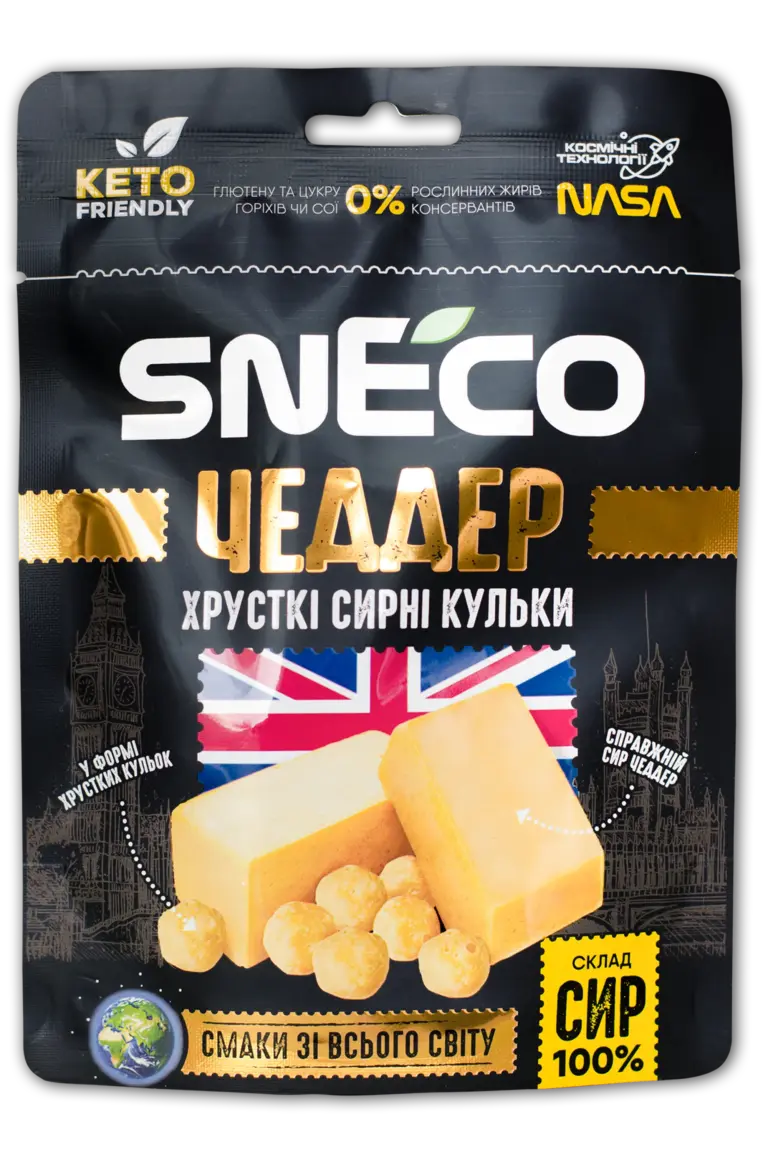
Short answer: cheddar is an English hard cheese from the village of Cheddar in Somerset, the most popular cheese in the world after mozzarella. Its taste is rich and slightly salty, with a nutty, slightly sharp note that grows with ageing. It gets its orange colour from the natural colouring annatto, not “by nature”: real cheddar is white or cream-coloured. It’s eaten with beer, in burgers and sandwiches, and in dried form — as a crunchy snack with 42 g of protein per 100 g.
The cheese has been made in Somerset since the 12th century. The distinctive technique is “cheddaring”: the cooked curd is cut into slabs that are repeatedly stacked and pressed until a dense, layered, dry mass forms. Hence the texture: cheddar isn’t springy like Gouda but crumbly and dense, and with age it breaks down into crystals. Young cheddar (3 months) is mild and milky, aged cheddar (12–24 months) is sharp, salty and “dry” in taste.
In the 16th–17th centuries, English farmers added carrot juice or saffron to cheese to make it look “richer”: the colour was associated with the May milk of cows grazing on fresh grass. Later annatto took over — a natural colouring from the seeds of the achiote tree, with no taste or smell. That’s how orange became the “signature” colour, especially in American and Canadian cheddar. snEco cheddar is coloured with beta-carotene — a natural provitamin A from that very same carrot; the ingredient list stays clean: cheese and beta-carotene.
| Occasion | How |
|---|---|
| With beer | the best match for IPA and pale ale: the saltiness balances the hop bitterness. See Beer snacks |
| With wine | medium-bodied red — Merlot, Chianti |
| Burger, sandwich | melts evenly and stretches — a classic |
| Mac and cheese | the base of the cheese sauce |
| With an apple | a British tradition: a slice of cheddar + a tart apple |
| Dried, as a snack | crunchy bites with 42 g of protein: with beer, on the road, instead of crisps |
Fresh cheddar: about 25 g of protein, 33 g of fat, 400 kcal per 100 g. snEco dried cheddar: 42.3 g of protein, 46.8 g of fat, 1.5 g of carbs, 605 kcal per 100 g — so a 28 g pack gives 11.8 g of protein and 169 kcal. Salt — 2.8 g per 100 g. There are almost no carbs and no gluten-containing ingredients, which makes it one of the best cheeses for keto. Comparison with other cheeses — how much protein is in cheese.
The same cheddar bites, with the water removed in a vacuum at 36–38 °C: the flavour concentrates, the texture turns crunchy, and a pack keeps for 18 months without a fridge. The most popular flavour for a beer night. Formats: 14 g, 28 g, 500 g, mix Cheddar + almond, box of 15 packs. Other flavours — in the range guide.
Author: Pylyp Gryshyn, co-founder of snEco, head of production
Share on:

We’ll call you back and help!

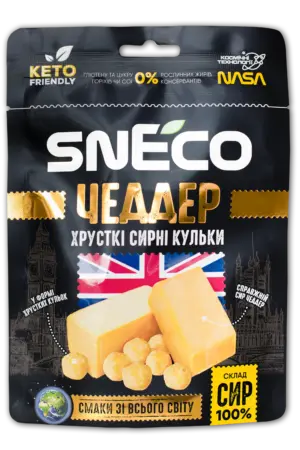 Dried snEco Cheese “Cheddar”, 28 g
 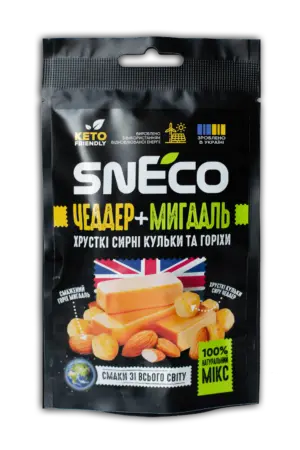 Dried snEco Cheese Mix “Cheddar + Almond”, 20 g
 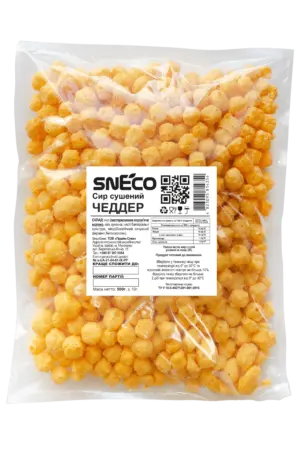 Dried snEco Cheese “Cheddar”, 500 g