We ship orders the same or next day. DPD delivery: 2–7 days, free from €100. We ship orders the same or next day. DPD delivery: 2–7 days, free from €100. We ship orders the same or next day. DPD delivery: 2–7 days, free from €100.
We ship orders the same or next day. DPD delivery: 2–7 days, free from €100. We ship orders the same or next day. DPD delivery: 2–7 days, free from €100. We ship orders the same or next day. DPD delivery: 2–7 days, free from €100.
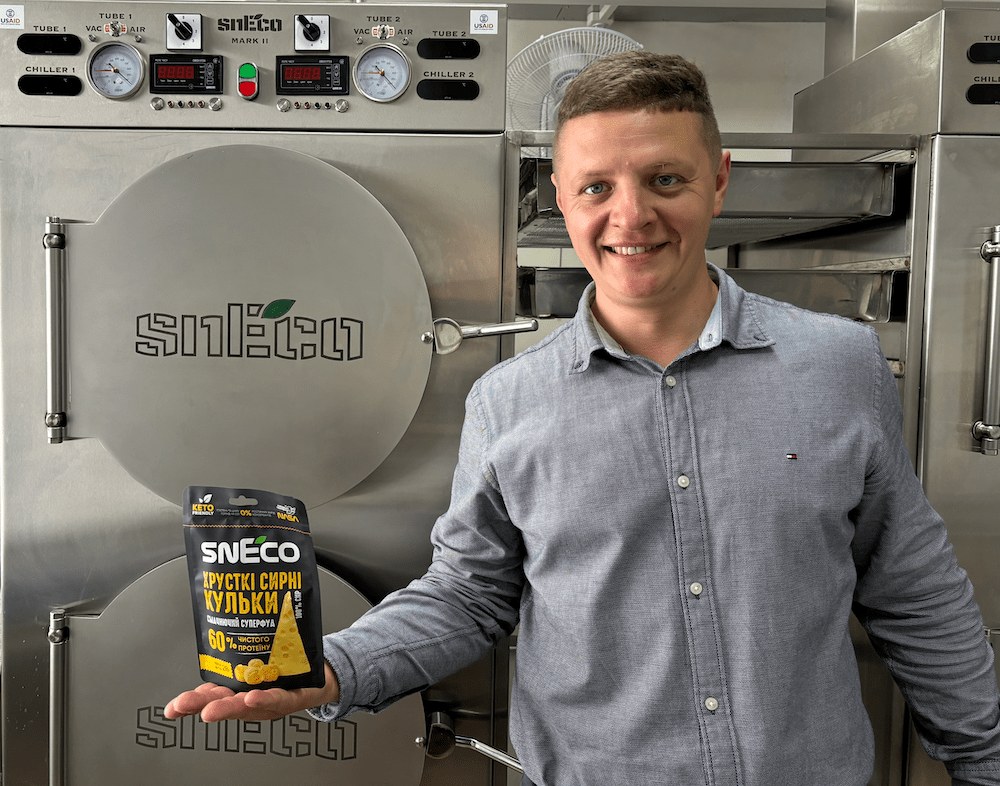
In short. The cheese is not fried or baked. It is dried in a vacuum at 36–38 °C — below body temperature. The moisture escapes on its own, the protein is not broken down, and the cavities left inside are what give the crunch. The technology is our own, patented, and called VacWave Bio Nutrition.
Ordinary cheese is about 40% water. To make it crispy, the water has to be removed — the only question is how.
The simplest way is frying or high heat. But then the protein coagulates, the fat oxidises, and the taste becomes “baked”. You end up with a completely different product.
In a vacuum, water boils at a much lower temperature than at normal pressure. This makes it possible to evaporate the moisture at 36–38 °C — roughly human body temperature. The microwaves don't work the way they do in a household microwave: they don't “fry” the cheese but deliver energy evenly throughout its mass, so that moisture escapes equally from the centre and the edges.
What this gives you in the end:
snEco is often described as “snacks made with NASA technology” — that's how several media stories presented it, and the phrase stuck. It deserves an honest explanation.
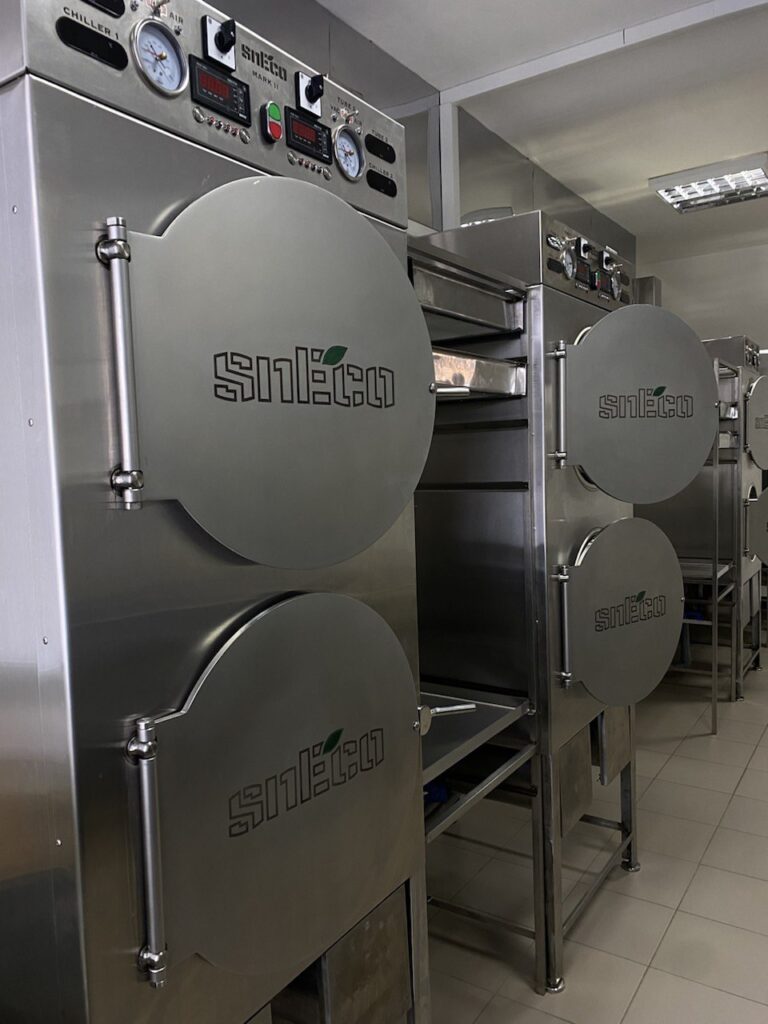
The principle of vacuum drying really is well known and has been used in the space industry — where food is needed that doesn't spoil and weighs little. But snEco's equipment and production process were developed in-house and are protected by Ukrainian patent No. 139035. The chambers you see in the photos were designed for one specific task: drying cheese while preserving its structure.
In other words, the idea of vacuum drying isn't new. What's new is how to turn it into crispy cheese industrially, consistently and at scale.
Production is located in Mukachevo in Transcarpathia — the company moved there from Kharkiv in 2022. A second site operates in Humenné, Slovakia.
In the photo above is Pylyp Gryshyn, the co-founder responsible for production. This isn't a stock image: he and his brother spent several years searching for the mode in which cheese turns crispy rather than rubbery.

Production in Mukachevo runs on solar electricity — the panels sit right on the workshop roof. For a process that keeps chambers under vacuum for hours, this is a noticeable share of production costs, and at the same time a reason the product can be called eco-friendly not only because of its ingredients.
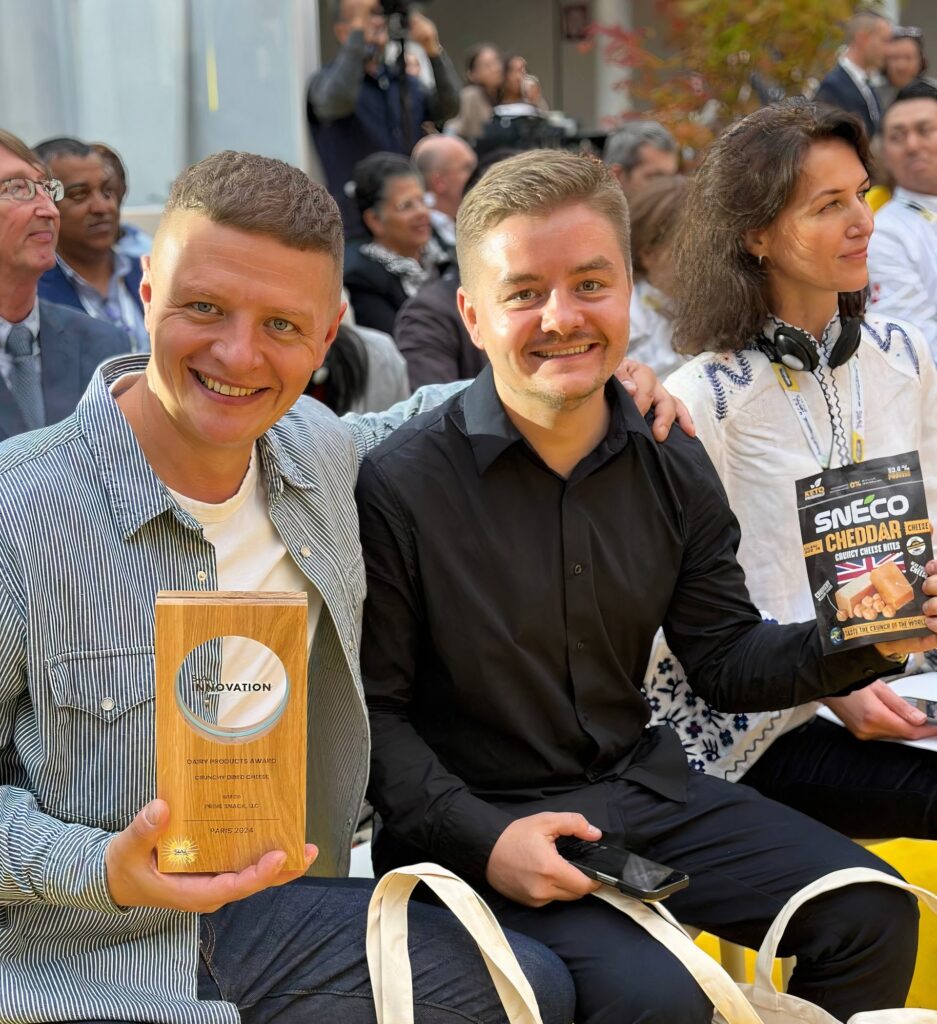
In 2024, snEco received SIAL INNOVATIONS 2024 in Paris — the main innovation award at one of the world's largest food trade shows. It was the product and the technology that were judged, not the marketing.
Production is certified to FSSC 22000 and ISO 22000 and operates under a HACCP system.
Vacuum drying is not a fast process. The chamber holds a low temperature and reduced pressure for hours: the water can't be driven out abruptly, or the cheese will lose its shape and crack instead of puffing up evenly.
That's why output is limited by physics, not by willpower. To make more, you need more chambers — which is why the photo shows several in a row rather than one big one.
Cheese is about 40% water. Once it's removed, about 600 grams of finished product remains from a kilogram of raw material — and that's the main reason crispy cheese can't cost as much as crisps.
Simple math: a 500 g bag is roughly 800 g of regular cheese that first has to be bought and then dried for several hours. Comparing the price of the snack with the price of crisps isn't fair: there, the raw material costs many times less.
The same technology can dry more than just cheese — the range already includes crispy green and black olives, made the same way, without frying or freezing.
But cheese turned out to be the most difficult and at the same time the most interesting material: it's high in protein and fat and sensitive to temperature, which is exactly why it took years to find the right mode. Products dominated by water and sugar are much easier to dry.
Since only water is removed from the cheese, nothing new appears in the ingredient list. Look at the pack: cheese, salt, starter culture, microbial enzyme. That's it.
That's rare on the snack shelf, where there's usually frying oil, flavour enhancers and starch. They're absent here not because of a marketing decision, but because technologically they're not needed.
Is it dry cheese or something else?
It's the same cheese, just with the water removed. Ingredients: cheese, salt, starter culture, microbial enzyme. Nothing is added.
Does it contain preservatives?
No. The product keeps for a long time precisely because it contains almost no moisture — bacteria have nothing to multiply in. Preservatives aren't needed for that.
Then why is the shelf life different for different formats?
The 14 and 28 g packs stay sealed until you eat them — 18 months. The 500 g bag is opened many times, so its shelf life is set more cautiously — 8 months.
Can you make this at home?
No. An oven has no vacuum, so the water will only evaporate at a high temperature — you'll get baked cheese, not crispy cheese.
Author: Pylyp Gryshyn, co-founder of snEco, head of production
Share on:

We’ll call you back and help!

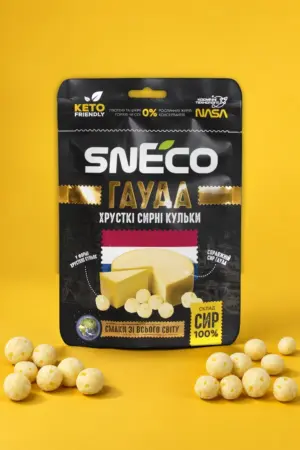 Dried snEco Cheese “Gouda”, 28 g
 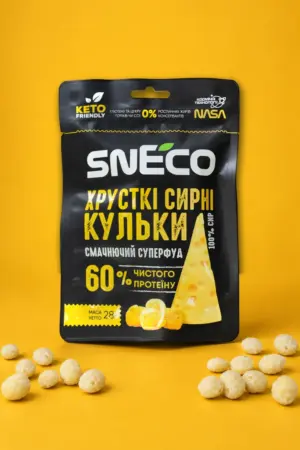 Dried snEco Cheese “Superfood”, 28 g
 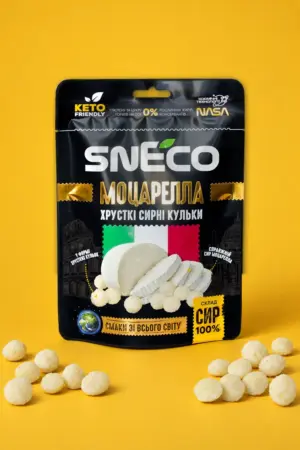 Dried snEco Cheese “Mozzarella”, 28 g