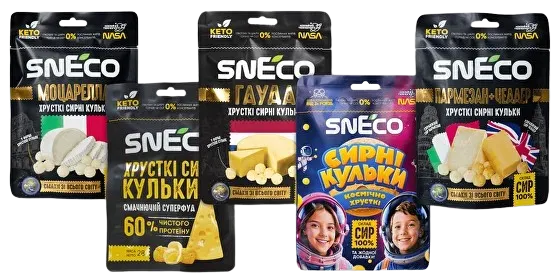
Protein snack made from dried cheese: as much protein as in two eggs, without powders or syrups
A 28 g pack of crispy cheese means 12–17 g of protein, less than 0.5 g of carbs and one ingredient. It needs no fridge, doesn’t melt in your bag and doesn’t need a spoon. For work, travel, after a workout — and instead of a protein bar.
How much protein is in dried cheese
Hard cheese is already one of the most protein-rich foods, and when it is dried the water evaporates and the protein becomes concentrated: 31–60 g per 100 g depending on the flavour. For comparison: chicken breast — 23 g, egg — 13 g, Greek yoghurt — 10 g, a protein bar — 20–30 g, but with a long ingredient list. One 28 g pack gives as much protein as two eggs — and you can carry it in your pocket for months.
| Flavour | Protein per 100 g | Protein per 28 g pack | Fat per 100 g | Kcal per pack |
|---|---|---|---|---|
| SUPERFOOD | 60 g | 16.8 g | 24 g | 134 |
| Primaggio | 53.4 g | 15 g | 42.2 g | 193 |
| Smoked Sulguni | 52 g | 14.6 g | 40 g | 153 |
| Mozzarella | 49.4 g | 13.8 g | 44.1 g | 159 |
| Gouda | 48.3 g | 13.5 g | 44.2 g | 176 |
| Smoked Emmental | 46 g | 12.9 g | 44 g | 185 |
| Cheddar | 42.3 g | 11.8 g | 46.8 g | 169 |
Why it beats a protein bar
Ingredients
Cheese. A bar contains isolate, syrup, polyols, flavouring, emulsifier and often palm oil.
Complete protein
The milk protein in cheese (casein and whey) contains all essential amino acids and is digested more slowly than powder — so you stay full longer.
No sugar and no gluten-containing ingredients
0 g of added sugar, up to 1.1 g of carbs per pack, no flour. Also suitable for keto.
Calcium
It’s the same cheese — with the calcium that bars usually lack.
Doesn’t melt
A bar in the sun turns to mush. Dried cheese stays just as crunchy at +30 °C and in a backpack.
Price per 10 g of protein
A pack of Gouda for approx. €3.10 gives 13.5 g of protein — about €2.30 per 10 g of protein. Compare that with a €2–3 bar with 20 g.
Most protein
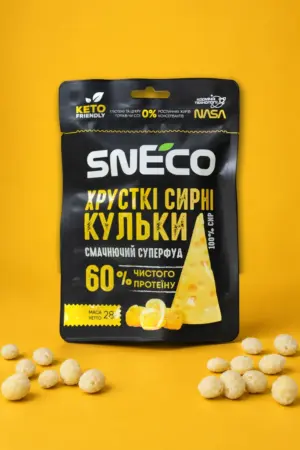 Dried snEco Cheese “Superfood”, 28 g
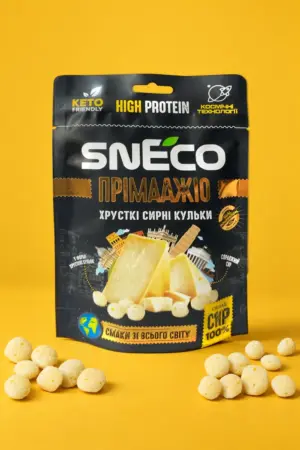 Dried snEco Cheese “Primaggio”, 28 g
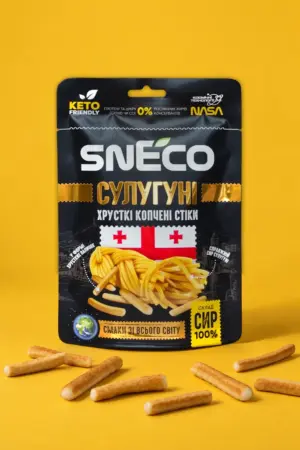 Dried snEco Cheese “Sulguni”, 28 g
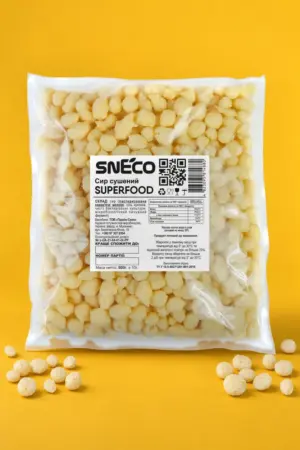 Dried snEco Cheese “Superfood”, 500 g
When to eat
- After a workout. 15–17 g of protein from a pack of SUPERFOOD or Primaggio covers your recovery needs while you’re on your way home. Before a workout, something lighter is better: fat slows digestion.
- At work instead of biscuits. A 28 g pack in your drawer is a snack that doesn’t tempt you into coffee with sugar. Mini packs of 14 g — if you want just a little.
- On the road and for a run around town. Needs no fridge or dishes and weighs less than an apple. See travel snacks.
- For kids after their activities. Mozzarella or kids’ “Cosmic”: mild taste, 13 g of protein, no sugar. See snacks for kids.
- For those losing weight. Protein and fat keep you full for a long time, and there are almost no carbs. One pack is 135–195 kcal, like a handful of nuts, but with twice as much protein.
Protein that needs no fridge
This is the main practical advantage over cheese, eggs or yoghurt: dried cheese keeps for 18 months at room temperature (14 and 28 g packs), needs no spoon or napkins, doesn’t leak and doesn’t smell in the office. A box of 15 packs at the office or 500 g at home — and you always have a protein snack, not just “when you’ve bought some”. More on the ingredients and how to read the protein content on the label — in the article protein snack made from dried cheese.
Questions about protein and dried cheese
How much protein is in one pack of dried cheese?
Why is dried cheese better than a protein bar?
When is it better to eat it — before or after a workout?
Is it suitable for weight loss?
How much fat is in dried cheese?
Can you give it to kids as a protein snack?
See also: keto snacks · all about dried cheese · boxes of 15 packs for the office.