We ship orders the same or next day. DPD delivery: 2–7 days, free from €100. We ship orders the same or next day. DPD delivery: 2–7 days, free from €100. We ship orders the same or next day. DPD delivery: 2–7 days, free from €100.
We ship orders the same or next day. DPD delivery: 2–7 days, free from €100. We ship orders the same or next day. DPD delivery: 2–7 days, free from €100. We ship orders the same or next day. DPD delivery: 2–7 days, free from €100.
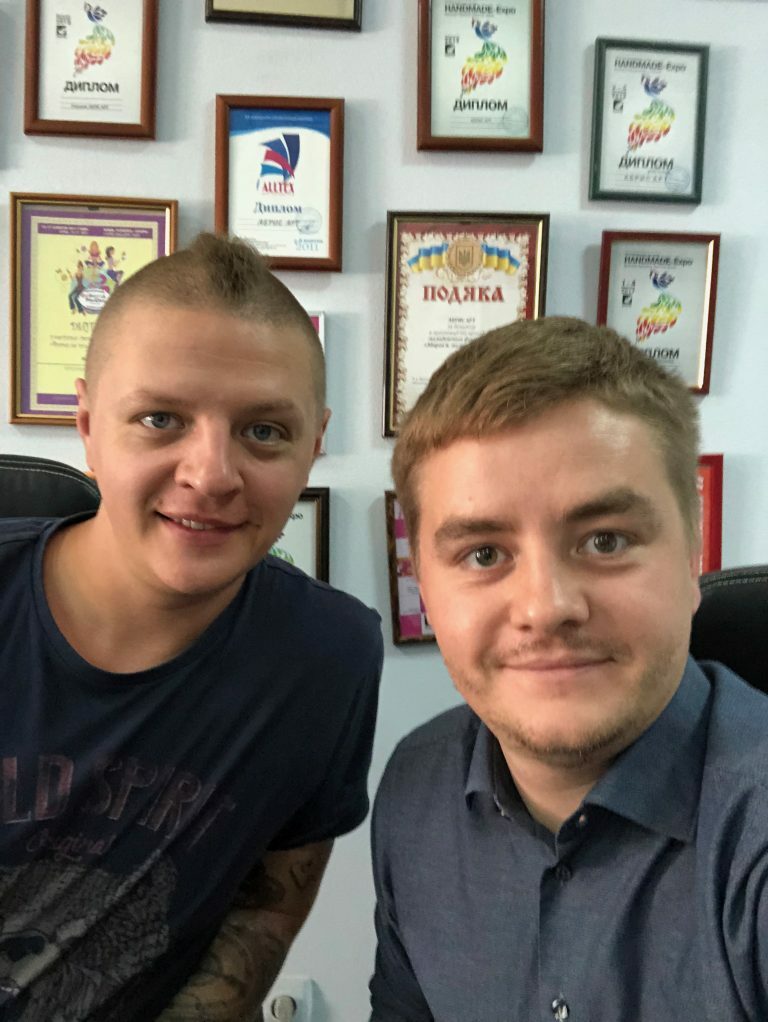
Kharkiv native Vadym Gryshyn is a co-founder of snEco, a brand of cheese bites. In just a couple of years since its founding, the business’s annual turnover reached UAH 3 million.
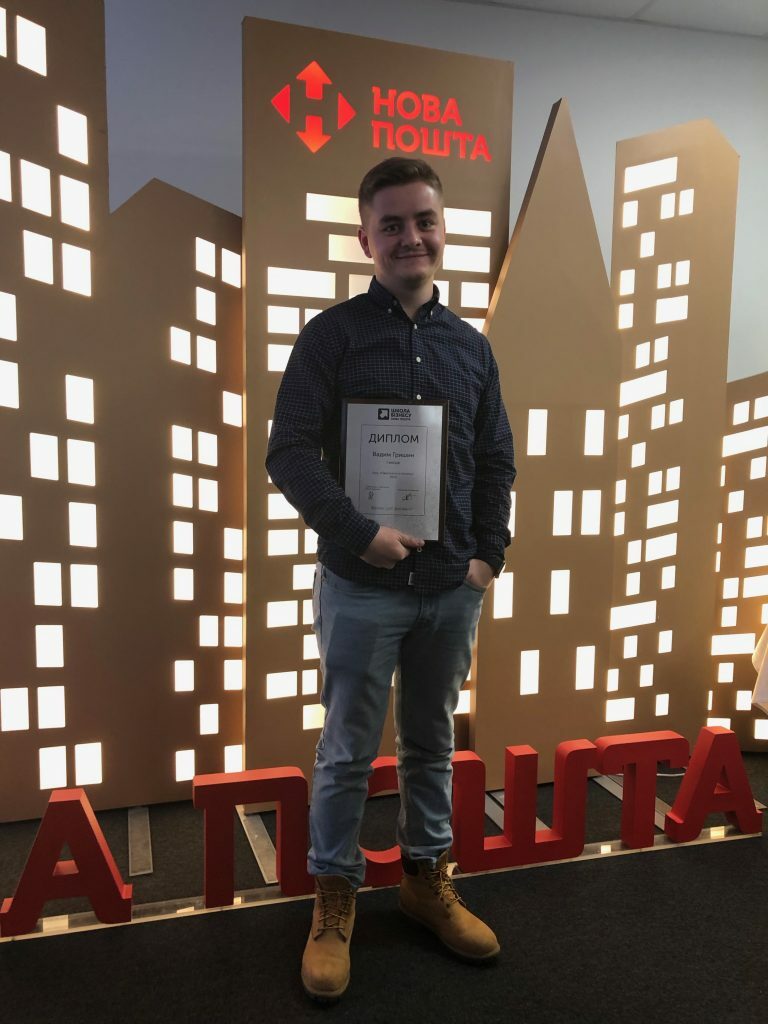
At the end of 2018, the entrepreneur took part in the Nova Poshta Business School project. Vadym told MC Today, the project’s media partner, how he entered a market that was new to him and how knowledge helps him run the business effectively.
Two million cheese bites a year
snEco is crunchy pieces of cheese with the moisture removed. Vadym Gryshyn and his brother Pylyp founded the brand two years ago. In that time, they have bought equipment, developed the technology and set up supplies to several national retail chains.
As early as 2018, the entrepreneurs reached an annual turnover of UAH 3 million. In terms of product, that is 70 thousand packs (or about 2 million cheese bites).
This is not the brothers’ first business. For ten years now they have been running AbrisArt, a company that makes embroidery kits. Despite their extensive experience, the Gryshyns realised that they lacked the knowledge to develop the new venture.
At the beginning of autumn, Vadym joined the Nova Poshta Business School project. With his strategic plan for improving snEco’s efficiency, he took first place among the Kharkiv graduates and won a grant for Nova Poshta services.
“We used to feel like blind kittens. Now we have a very clear plan: triple our turnover during 2019 and enter the markets of Europe and Israel. We are also looking at the USA,” Vadym shares.
From embroidery to snacks
Vadym and Pylyp started their first big business ten years ago, while they were still students. They came up with and patented bead embroidery on canvas. Today, their company AbrisArt sells its products on four continents, and its annual turnover in Ukraine alone is UAH 5 million.
Two years ago, the Gryshyns felt that their established business no longer gave them a buzz, and decided to come up with something new. The idea was born in the kitchen.
“We love cheese and wanted to find a technology that would extend its shelf life and make it airy and crispy,” says Vadym.

The search took six months and about UAH 3 million. The brothers worked out the sequence of cycles and the drying temperature at which the raw material turns into crispy bites. It takes 1 kg of cheese to make 400 g of snacks. No preservatives or colourings are used.
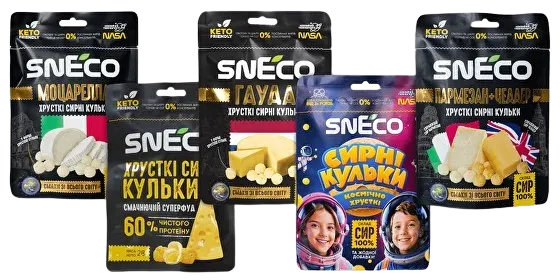
The first success came 8 months later. The company supplied several thousand packs of snEco to the OKKO chain of filling stations. They now produce four kinds of snacks: Fitness, Mozzarella, Gouda Cheese and Smoked Sulguni. The last two are the most popular. A 40 g pack costs about UAH 50.
While studying at the Nova Poshta Business School project, Gryshyn and his team decided to launch a children’s line in special packaging as well. The Fitness snacks will also get new packaging – they will now come in 28 g packs. The company arrived at this figure after analysing several focus groups.
All because, during the classes, the entrepreneur realised one of snEco’s main mistakes. “Before, we didn’t even think about who exactly our customer was, and tried to sell everything to everyone at once,” Vadym admits. Now they take positioning much more seriously.
Problem No. 1 – finding quality cheese
When the brothers were just starting production, they were horrified by the quality of Ukrainian cheese.
“Small factories often replace milk fat with palm oil. Such cheese doesn’t puff up, and with our technology you can’t get crispy bites out of it,” Vadym explains.
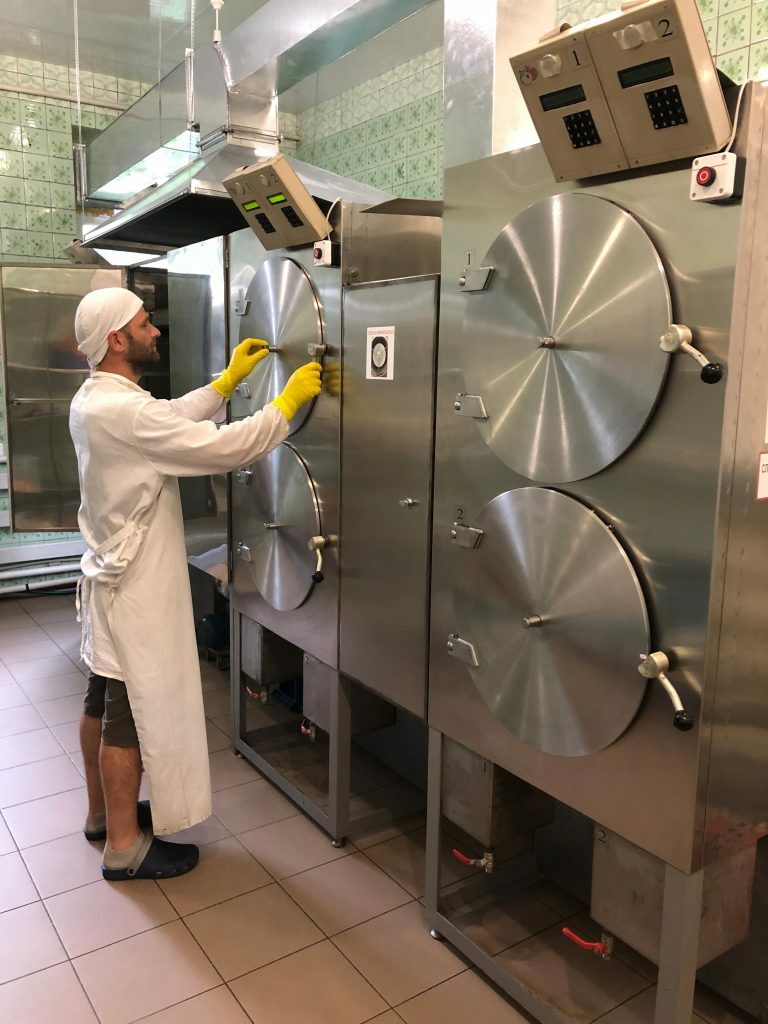
After a series of setbacks, the company began working with the largest domestic producers. One of them is the Shostka plant, owned by the European group Groupe Bel. Its representatives approached the Gryshyns themselves.
The CEO of “Bel Shostka Ukraine” saw snEco at an OKKO station. He tried it and bought up everything the filling station had – for a tasting. As a result, the company offered the brothers to make snacks from its cheese. That is how the joint “Shostka” line came about.
Production meets international standards
Production meets international standards
Before its launch, the Gryshyns passed an inspection by the quality and food safety department of Groupe Bel’s European division. To bring production up to international standards, it had to be re-equipped. The process dragged on for six months and cost several hundred thousand hryvnias.
In return, the company obtained the HACCP food safety certificate and the ISO 14024 environmental certificate. This gives them the right to officially use the wording “Ukraine’s first eco-snack” on the packaging. With such documents, they can also supply goods to any national retail chain and enter foreign markets.
To prepare for this step, Vadym will shortly take a course on organising exports for small and medium-sized businesses, which Nova Poshta is launching on the Prometheus platform.
The specifics of Ukrainian retail
Another serious obstacle the entrepreneurs came up against was the high fees charged by large retail chains.
For example, an experiment selling snacks in the ATB chain would have cost UAH 3 million, Gryshyn says. With no guarantees whatsoever – after a month, ATB could either offer to continue working together or turn them down.
The prospect did not inspire the brothers. They reached agreements with other large chains, including Silpo, Novus and Eko-Lavka. “In some places we paid both an entry fee and marketing contributions, but the amounts turned out to be manageable,” says Vadym.
Learning in the USA and in Ukraine
A few months before his classes at the Nova Poshta Business School, Gryshyn visited the USA. There he took part in SABIT, a training programme run by the US Department of Commerce for young innovative companies from Eastern Europe.
The programme was built around practical tasks. For example, participants had to find a poorly presented product in New York supermarkets – be it the name, the colour or the packaging design. Vadym spent three days on this: unlike in Ukraine, it is practically impossible to find a badly designed product in the USA. It simply doesn’t survive in a competitive market.
And in a local Starbucks, which usually sells only coffee and pastries, Gryshyn found cheese bites similar to snEco. This convinced him that such snacks are needed on the Western market.
“It will sound self-confident, but snEco is better in taste and shape. The Starbucks snack crumbles and leaves greasy marks on your hands,” Gryshyn shares. “And I’m not sure the raw material there is completely natural.”
While the American programme mostly inspired the entrepreneur, the training at the Nova Poshta Business School project gave him tools for working in Ukrainian realities, Vadym says, comparing the two experiences.
After the first classes, Gryshyn began optimising processes in both businesses. For example, he learnt to forecast stock levels based on statistics. This made it possible to reduce AbrisArt’s warehouse space and ship orders every day. Incidentally, about 98% of these shipments go through Nova Poshta.
Since finishing the programme, Vadym has kept in touch with its participants in a Telegram chat. That is 80 entrepreneurs from Kharkiv and over 400 from all over Ukraine, who share experience and contacts. For example, in January Vadym received contacts of representatives of major retailers from other graduates.
Original article: https://mc.today/potratili-3-mln-grn-v-poiskah-idealnogo-vkusa-syra-predprinimateli-za-god-prodali-2-mln-syrnyh-sharikov/
Share on:

We’ll call you back and help!